

Most Mitzvahs Look the Same. Yours Doesn't Have to.
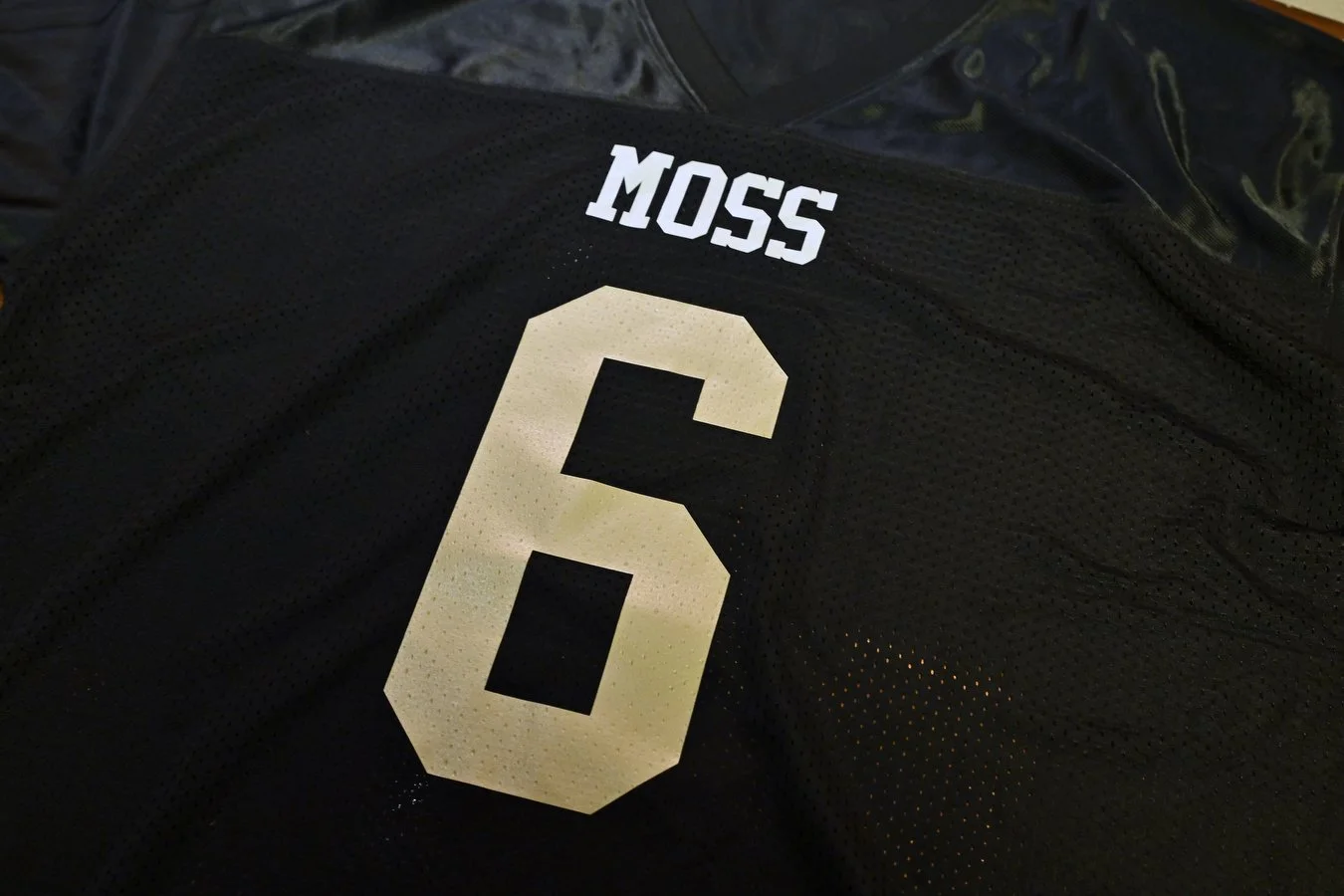
Custom football jersey for a Bar Mitzvah
Every parent who has sat across from me in the early months of planning has said some version of the same thing: 'I just don't want it to feel like every other Mitzvah we've been to.'
It's the most honest thing a parent can say. And it tells me everything.
Because here's what I've learned after designing Mitzvahs across Denver and Boulder: the families who end up with an event that genuinely feels different aren't the ones who picked the most original theme. They're the ones who stopped asking 'what should the theme be?' and started asking 'what does this day need to feel like for my child?'
Those are two very different questions. The first one puts you in a catalog. The second one puts you in the room
A theme is a starting point. A story is what people remember.
Here are four ways we approach personalization at Aura & Frame. None of which require a mood board, a Pinterest rabbit hole, or a theme you've seen somewhere before.
01. Start With Your Child's World, Not a Trend List
When I begin working with a family, I don't ask about color palettes or venue vibes. I ask about the child.
What do they talk about at dinner? What do they do when nobody is watching? What lights them up, embarrasses them, makes them feel most like themselves? Is there a song they've played on repeat for six months? A place they love? A running joke the whole family knows?
That is the raw material of an experience that feels like them. Not neon signs and LED screens (though sometimes those belong, too, but a design language that speaks their actual personality into the room.
The best example I can give is a Bat Mitzvah I designed called Maya in Moments built entirely around the idea that the celebration should capture every moment that makes this particular girl who she is. Guests walked in to a wall of photographs from her life and they wrote her a postcard on the back. The centerpieces held more images, family moments, candid shots, with each table a different combination. Nothing in the room was generic. Every detail was evidence of a specific person. That specificity is what people feel.
02. Design One Moment That Belongs Only to Them
One of the most meaningful things you can build into a Mitzvah isn't a décor element. It's a moment.
I'm talking about something intentional in the run of show, a 60-second pause in the evening that was built specifically for this child, that could not have existed at any other Mitzvah.
It might be a video message from someone they deeply admire. A performance by a sibling or best friend that surprises them. A candlelight ceremony rewritten to include the things they actually care about, in language they actually recognize. A meaningful activity before dinner that pulls in their passion, and makes guests feel and be a part of it too.
These moments cost less than you'd think. They are remembered long after the florals have faded.
Guests don't remember the centerpieces. They remember the moment they felt something.
03. Let the Design System Speak, Not Just Decorate
Custom branding for Mitzvahs has become standard. A logo, a color palette, stationery that carries through from the invitation to the program to the signage. When it's done well, it's genuinely powerful.
But there's a difference between applying a logo to everything and building a design system that communicates who the child is.
Every visual decision should be in conversation with the child's personality. A child who is bold and theatrical needs a different design language than one who is quiet and detail-obsessed. A child who loves the outdoors reads the world differently than one who is drawn to architecture or fashion or competitive chess.
When I develop a design system for a Mitzvah, I'm asking: what does this feel like to walk into? What does the font say about this person? What does the color palette communicate before a single guest has read a word?
The goal isn't a beautiful event. The goal is an immediately recognizable one. Where every person who walks in knows, without being told, whose night it is.
04. Consider the Guests Who Aren't 13
Here's the tension at every Mitzvah: the celebration belongs to the child, but the room is full of adults. And those adults, grandparents, family friends, colleagues of the parents need to feel something too.
The most beautifully designed Mitzvahs I've been a part of held both worlds at once. The kid's energy was real and high. The adult experience was warm and considered. Neither felt like an afterthought.
This is an experience design problem, not a décor problem. It lives in the pacing of the evening, the placement of tween activities relative to dinner, the music arc, the moments of stillness between the movements. It's about reading the room and engineering it intentionally, so a 70-year-old grandmother and a 13-year-old best friend can both leave saying the same thing: that was so well done.
That's the experience I strive to build toward, every time.
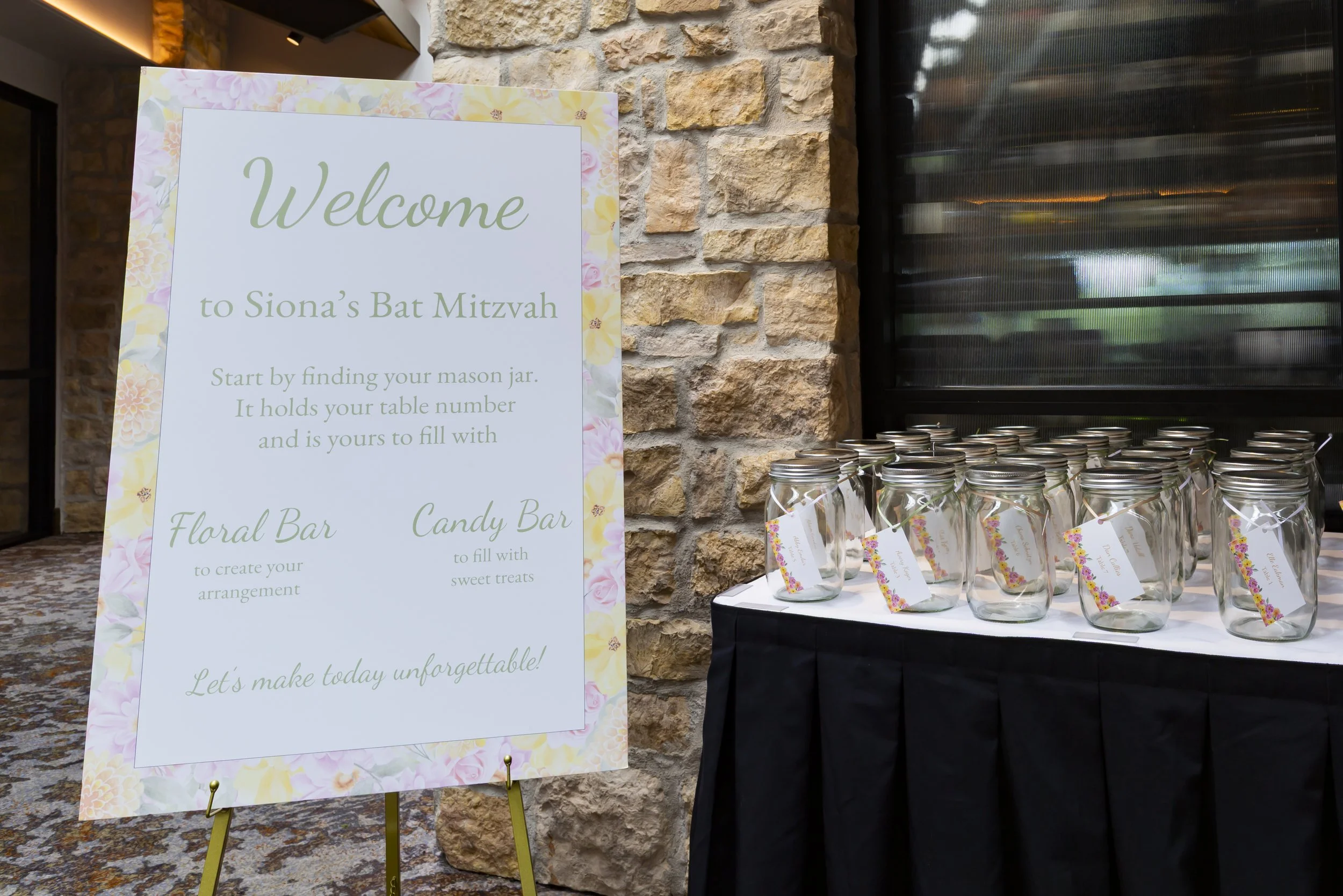
Personalized welcome sign and table seatings
The Question Underneath All of This
Every Mitzvah family I work with wants the same thing, even if they don't always have the words for it at the start of the process.
They want to stand at the entrance to the room after 12 to 18 months of planning and feel it. To look at their child's face and know that what they're standing inside was built for them. Not borrowed from a template. Not assembled from a trend list. Theirs.
That feeling doesn't come from finding the right theme. It comes from asking the right questions early enough in the process to let the answers shape everything.
If you're in the early stages of planning a Bar or Bat Mitzvah in the Denver or Boulder area and you want to talk about what yours could feel like, that's exactly the conversation I love to have.
We don't just design events. We design how people feel when they're in them.
Ready to Begin?
Book a discovery call to start the conversation. I'd love to hear about your child.